Shoulder replacement surgery helps relieve chronic shoulder pain, restore movement, and improve daily comfort. Proper treatment and rehabilitation support better recovery and long-term joint function.
Shoulder pain and limited movement can make daily activities such as getting up, getting dressed, and sleeping extremely difficult. If medications, physical therapy, and lifestyle changes do not improve your symptoms, shoulder replacement surgery may be an effective treatment option.
This advanced orthopedic procedure helps reduce chronic pain, restore joint function, and improve overall quality of life. At Vishwanath Hospital, a trusted name among hospitals in Pratap Nagar Jaipur, patients receive expert orthopedic guidance and modern treatment solutions.
Early diagnosis and timely consultation at a reliable Pratapnagar hospital can help prevent worsening joint damage and support long-term shoulder health.
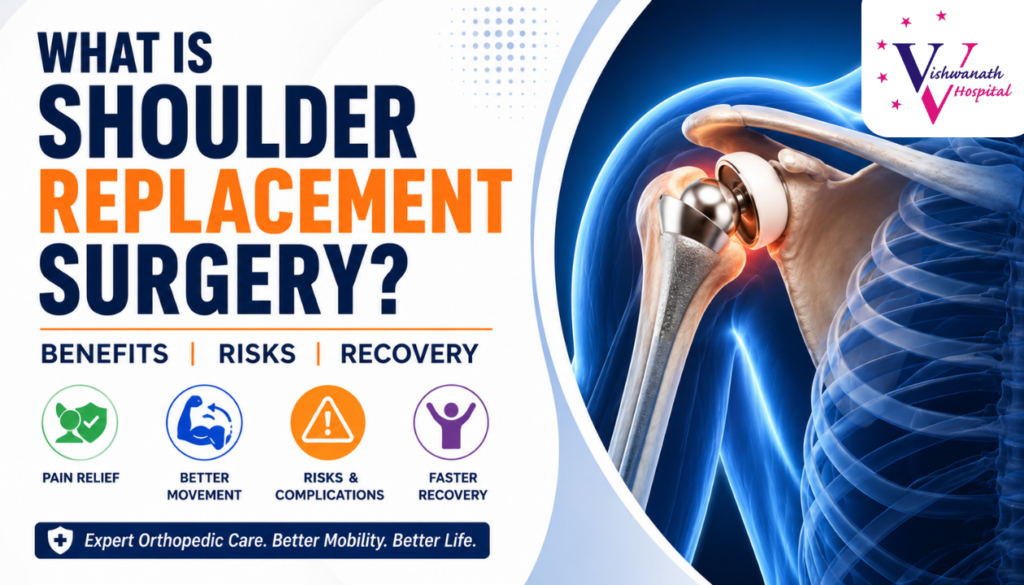
What is Shoulder Replacement Surgery?
Shoulder arthroplasty, also known as shoulder arthroplasty, is a surgical procedure that replaces damaged cartilage and bone in the shoulder joint with an artificial component made of metal or plastic. This treatment is generally recommended when severe degeneration or damage to the joint causes persistent pain and limited shoulder movement.
The surgery aims to restore joint function and provide long-term relief from discomfort. Proper orthopedic evaluation helps determine whether surgery or conservative treatment is the right option.
When is Shoulder Replacement Surgery Needed?
Doctors may recommend shoulder replacement surgery when:
- Severe shoulder pain affects daily activities
- Shoulder stiffness limits movement
- Arthritis damages the shoulder joint
- Rotator cuff injury causes instability
- Non-surgical treatments fail to provide relief
At a trusted Pratapnagar hospital, treatment planning is based on the patient’s symptoms, imaging reports, and overall shoulder condition.
Types of Shoulder Replacement Surgery
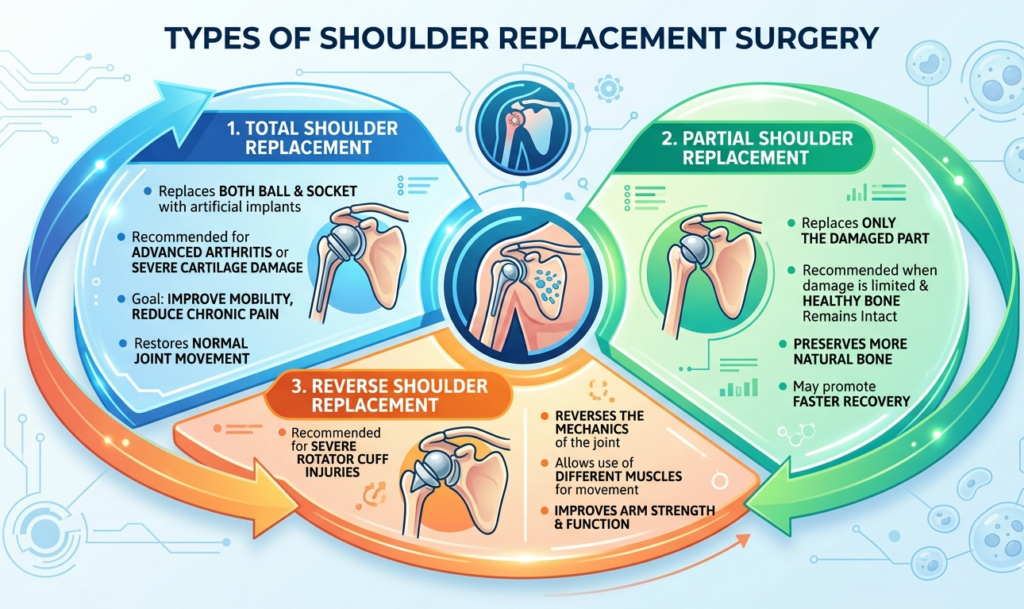
1. Total Shoulder Replacement
Total shoulder replacement involves replacing both the ball and socket of the damaged shoulder joint with artificial implants.
This option is usually recommended in cases of advanced arthritis or severe cartilage damage. The goal is to improve shoulder mobility and reduce chronic pain while restoring normal joint movement.
2. Partial Shoulder Replacement
A partial shoulder replacement replaces only the damaged part of the shoulder joint. It is usually recommended when joint damage is limited and healthy bone structure remains intact.
This method preserves more natural bone and may promote faster recovery.
3. Reverse Shoulder Replacement
Reverse shoulder replacement surgery is often recommended for patients with severe rotator cuff injuries.
This procedure reverses the mechanics of the joint and allows you to use different muscles to move your shoulder. This helps improve arm strength and function when standard replacements are not suitable.
Benefits vs Risks of Shoulder Replacement Surgery
| Benefits of Shoulder Replacement Surgery | Risks of Shoulder Replacement Surgery |
| Relief from Chronic Shoulder Pain – Helps reduce long-term pain and discomfort caused by arthritis or joint damage. | Infection – Like any surgery, there is a small risk of infection that requires medical attention. |
| Improved Arm Movement & Flexibility – Restores shoulder mobility and supports smoother daily movements. | Temporary Swelling or Stiffness – Some patients may experience swelling and limited movement during recovery. |
| Better Sleep & Daily Comfort – Reduced pain often helps patients sleep better and perform routine activities comfortably. | Implant Wear Over Time – Artificial joint components may wear out gradually over many years. |
| Increased Joint Stability – Provides better shoulder support and reduces instability caused by damaged joints. | Blood Clot Risk – Though uncommon, blood clots can occur and require proper preventive care. |
| Enhanced Quality of Life – Helps patients regain independence and return to an active lifestyle. | Nerve or Tissue Injury (Rare) – Rare complications involving nearby nerves or soft tissues may occur. |
Summary
Many patients with chronic shoulder pain experience significant improvement after shoulder replacement surgery. Correct diagnosis, skilled orthopedic care and rehabilitation help maximize benefits and reduce surgical risks.
Recovery After Shoulder Replacement Surgery
Recovery time from total shoulder replacement surgery depends on the patient’s age, health, and rehabilitation progress. Most patients begin light exercise immediately after surgery and gradually regain their strength through physical therapy.
Full recovery may take several months. Following medical advice and rehabilitation plans plays an important role in restoring shoulder function and achieving long-term results.
Conclusion
Shoulder arthroplasty is a modern and effective treatment for serious shoulder joint problems, but it is not necessary for everyone. The most appropriate treatment depends on your symptoms, joint condition, lifestyle, and medical evaluation.
Early consultation with an orthopedic specialist can help identify the right treatment approach and prevent worsening joint damage.
If you are struggling with persistent shoulder pain or limited movement, do not ignore the symptoms. Visit Vishwanath Hospital, a trusted name among hospitals in Pratap Nagar Jaipur, for expert orthopedic consultation and guidance.
Book your appointment today and take the first step toward comfortable movement and better joint health.
FAQ’s
1. What is shoulder replacement surgery?
Shoulder replacement surgery is a procedure where damaged parts of the shoulder joint are replaced with artificial implants to reduce pain and improve movement.
2. When is shoulder replacement surgery needed?
This surgery is usually recommended when severe shoulder pain, arthritis, or joint damage does not improve with medicines or physiotherapy.
3. Is shoulder replacement surgery safe?
Yes, shoulder replacement surgery is generally considered safe when performed by experienced orthopedic surgeons with proper medical evaluation and post-operative care.
4. How long does shoulder replacement surgery take?
Most shoulder replacement procedures take around 1 to 3 hours, depending on the type of surgery and joint condition.
5. What is the recovery time after shoulder replacement surgery?
Recovery varies for each patient, but most people regain daily shoulder movement within 3 to 6 months with physiotherapy and rehabilitation.
6. What are the benefits of shoulder replacement surgery?
The surgery helps reduce chronic pain, improve arm movement, increase shoulder stability, and support a better quality of life.
7. Are there any risks involved in shoulder replacement surgery?
Possible risks include infection, temporary stiffness, swelling, blood clots, and implant wear over time, although serious complications are uncommon.
8. What is the difference between total and reverse shoulder replacement?
Total shoulder replacement replaces damaged joint surfaces, while reverse shoulder replacement is often recommended for severe rotator cuff damage.
9. Can I return to normal activities after shoulder replacement surgery?
Yes, many patients return to routine activities after recovery, though heavy lifting and strenuous activities may require medical advice.
10. How long do shoulder replacement implants last?
Modern shoulder implants can last 15 – 20 years or longer, depending on lifestyle, activity level, and joint care.
Reference:
https://my.clevelandclinic.org/health/treatments/8290-shoulder-replacement
https://www.narayanahealth.org/blog/shoulder-replacement-surgery-procedure-risks-and-post-surgery