
Vitamin D3 deficiency can cause bone pain, muscle weakness, fatigue, and low immunity. Early diagnosis, proper nutrition, sunlight exposure, and treatment help maintain strong bones and overall health.
Vitamin D3 is an essential nutrient that plays a crucial role in maintaining strong bones, healthy muscles, and overall body function. It helps the body absorb calcium and phosphorus, which are necessary for bone strength and joint health.
However, due to limited sun exposure, an indoor lifestyle, poor diet, and certain diseases, vitamin D3 deficiency is becoming increasingly common among people of all ages.
Low levels of vitamin D can lead to bone pain, muscle weakness, fatigue, decreased immunity, and an increased risk of fractures and osteoporosis. If left untreated, it can affect your mobility and overall quality of life.
At Vishwanath Hospital, one of the trusted hospitals in Pratap Nagar Jaipur, our orthopedic specialists emphasize early diagnosis, proper treatment, and preventive care to help patients maintain healthy bones, stronger muscles, and long-term joint health.
What is Vitamin D3 Deficiency?
Vitamin D3 deficiency occurs when the body does not have enough vitamin D to support normal bone, muscle, and immune functions. Vitamin D is primarily obtained through sunlight exposure, certain foods, and supplements.
When levels fall below normal, it becomes difficult for the body to absorb calcium effectively, which can lead to bone weakness, fatigue, and muscle problems. Early detection can help prevent complications and improve overall health.
Symptoms of Vitamin D3 Deficiency
1. Persistent Bone Pain
Persistent bone pain is one of the most common symptoms of Vitamin D3 deficiency. It usually affects the back, hips, knees, and legs, making daily activities uncomfortable.
Since vitamin D helps maintain bone strength, low levels can weaken bones, increase sensitivity, and cause ongoing aches that may worsen over time if left untreated.
2. Muscle Weakness
Vitamin D plays an important role in muscle health and strength. Deficiency can cause muscle weakness, difficulty going up and down stairs, reduced physical performance, and a decreased sense of balance.
Over time, weakened muscles may increase the risk of falls and injuries, especially in older adults, affecting overall mobility and quality of life.
3. Fatigue and Low Energy
Constant tiredness and low energy levels are common signs of Vitamin D3 deficiency. Even after getting enough rest, individuals may feel exhausted, unmotivated, and less productive throughout the day.
Low vitamin D levels can affect muscle function and overall body performance, contributing to ongoing fatigue and reduced daily activity.
4. Frequent Illness
Vitamin D supports the immune system and helps the body fight infections. Low vitamin D levels weaken your immune response, making you more susceptible to colds, flu, and other illnesses.
Delayed recovery from frequent infections and common illnesses is often associated with vitamin D deficiency.
5. Joint Pain and Stiffness
Vitamin D deficiency can contribute to joint pain, stiffness, and discomfort, especially in people already dealing with orthopedic conditions.
Low vitamin D levels may affect bone and joint health, making movement difficult and reducing flexibility. Persistent joint stiffness can interfere with daily activities and overall physical well-being.
6. Hair Loss
Severe vitamin D3 deficiency can cause excessive hair loss and poor hair growth. Vitamin D plays a role in maintaining healthy hair follicles and maintaining normal growth cycles.
While hair loss can have multiple causes, low vitamin D levels are often associated with increased shedding and thinning hair.
7. Slow Wound Healing
Vitamin D helps support tissue repair and the body’s natural healing process. A deficiency may slow recovery from cuts, injuries, and surgical wounds.
Individuals with low vitamin D levels may notice that wounds take longer to heal, increasing the risk of complications and delaying complete recovery.
8. Mood Changes
Research shows that vitamin D deficiency can affect your mental health and mood. Low levels of vitamin D are associated with irritability, mood swings, anxiety, and symptoms of depression in some people.
Maintaining adequate levels of vitamin D helps support emotional health and overall psychological well-being.
9. Frequent Muscle Cramps
People with Vitamin D deficiency often experience frequent muscle cramps, aches, and body pain.
Since vitamin D is essential for proper muscle function, low levels can lead to discomfort during physical activity or even while resting. Persistent cramps may indicate the need for medical evaluation and nutritional support.
10. Increased Risk of Fractures
Long-term Vitamin D3 deficiency weakens bones by reducing calcium absorption, increasing the risk of fractures and osteoporosis.
Even minor falls or injuries may result in bone damage when vitamin D levels remain low. Early diagnosis and treatment are important to maintain bone density and reduce fracture risk.
Symptoms of Vitamin D3 Deficiency vs Treatment Options
| Symptoms of Vitamin D3 Deficiency | Treatment for Vitamin D3 Deficiency |
| Persistent Bone Pain – Pain in the back, hips, knees, and legs due to weakened bones. | Sunlight Exposure – Spend 15–30 minutes in morning sunlight regularly to boost natural vitamin D production. |
| Muscle Weakness – Difficulty climbing stairs, reduced strength, and increased risk of falls. | Dietary Improvements – Include vitamin D-rich foods such as egg yolks, fatty fish, fortified milk, cheese, mushrooms, and yogurt. |
| Fatigue and Low Energy – Constant tiredness and lack of energy despite adequate rest. | Vitamin D Supplements – Doctors may recommend supplements based on blood test results and deficiency severity. |
| Frequent Illness – Reduced immunity leading to repeated infections and slower recovery. | Calcium Support – Adequate calcium intake helps vitamin D strengthen bones and improve bone density. |
| Joint Pain and Stiffness – Increased discomfort and reduced flexibility in joints. | Regular Monitoring – Periodic blood tests help track vitamin D levels and treatment progress. |
| Hair Loss – Excessive hair fall associated with severe vitamin D deficiency. | Balanced Nutrition – Follow a nutrient-rich diet to support overall health and vitamin D absorption. |
| Slow Wound Healing – Delayed recovery after injuries, cuts, or surgeries. | Healthy Lifestyle – Regular physical activity helps maintain stronger bones and muscles. |
| Mood Changes – Irritability, low mood, and symptoms of depression may occur. | Weight Management – Maintaining a healthy weight supports better vitamin D utilization in the body. |
| Frequent Muscle Cramps – Muscle aches and cramps, especially after physical activity. | Medical Consultation – Seek professional guidance for proper diagnosis and personalized treatment. |
| Increased Risk of Fractures – Long-term deficiency can weaken bones and increase osteoporosis risk. | Preventive Care – Regular health check-ups help identify deficiency early and prevent complications. |
Recognizing the symptoms of Vitamin D3 deficiency early and starting appropriate treatment can help improve bone strength, muscle function, immunity, and overall health while reducing the risk of long-term complications.
Cause of Vitamin D3 Deficiency
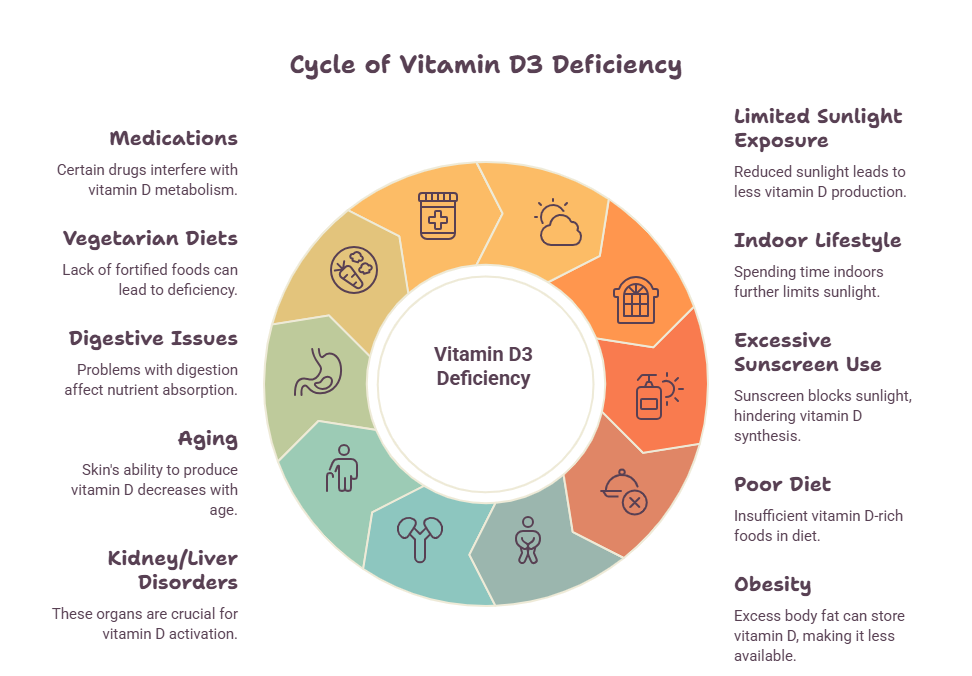
Several factors can contribute to cause of vitamin D3 deficiency, including:
- Limited exposure to sunlight
- Spending long hours indoors
- Use of excessive sunscreen
- Poor dietary intake of vitamin D-rich foods
- Obesity
- Kidney or liver disorders
- Aging and reduced skin production of vitamin D
- Digestive disorders affecting nutrient absorption
- Vegetarian diets lacking fortified foods
- Certain medications that interfere with vitamin D metabolism
Reason for Vitamin D3 Deficiency in Modern Lifestyle
The most common cause of vitamin D3 deficiency today is decreased exposure to natural sunlight. An urban lifestyle, desk jobs, increased screen time and lack of outdoor activities have significantly reduced the body’s production of vitamin D.
In addition, poor dietary habits and increasing obesity rates also contribute to this deficiency.
Complications of Untreated Vitamin D3 Deficiency
If left untreated, vitamin D deficiency can lead to:
- Osteoporosis
- Increased fracture risk
- Chronic bone pain
- Muscle weakness
- Reduced mobility
- Poor immunity
- Higher fall risk in elderly individuals
Early diagnosis and management can help avoid these complications.
Conclusion
Vitamin D3 Deficiency is a common health concern that can impact bone strength, muscle function, immunity, and overall well-being if left untreated. Early recognition of vitamin D3 deficiency symptoms such as bone pain, muscle weakness, fatigue, and joint discomfort can help prevent long-term complications and improve quality of life.
Maintaining healthy vitamin D levels through regular sunlight exposure, a balanced diet, and proper medical guidance is essential for strong bones and healthy muscles.
If you are experiencing symptoms of vitamin D deficiency, consult the experts at Vishwanath Hospital, one of the trusted hospitals in Pratap Nagar Jaipur, for expert evaluation, accurate diagnosis, and personalized treatment.
Book your appointment today and take the first step toward better bone, joint, and overall health.
Reference:
https://my.clevelandclinic.org/health/diseases/15050-vitamin-d-vitamin-d-deficiency
FAQ’s
1. What is Vitamin D3 deficiency?
Vitamin D3 deficiency occurs when the body does not have enough vitamin D to support healthy bones, muscles, immunity, and overall body functions.
2. What are the most common symptoms of Vitamin D3 deficiency?
Common symptoms include bone pain, muscle weakness, fatigue, joint pain, frequent illness, muscle cramps, slow wound healing, and increased fracture risk.
3. What causes Vitamin D3 deficiency?
The most common causes include limited sunlight exposure, poor diet, obesity, digestive disorders, aging, and certain medical conditions that affect vitamin D absorption.
4. How is Vitamin D3 deficiency diagnosed?
Doctors usually diagnose Vitamin D3 deficiency through a blood test that measures the level of vitamin D in the body, along with an evaluation of symptoms and medical history.
5. Can Vitamin D3 deficiency cause bone and joint pain?
Yes. Low vitamin D levels reduce calcium absorption, which can weaken bones and contribute to bone pain, joint discomfort, and muscle weakness.
6. What foods help improve Vitamin D3 levels?
Foods rich in vitamin D include fatty fish, egg yolks, fortified milk, yogurt, cheese, mushrooms, and fortified cereals.
7. How much sunlight is needed to prevent Vitamin D3 deficiency?
Most people can benefit from 15 – 30 minutes of morning sunlight exposure several times a week, depending on skin type, age, and location.
8. What happens if Vitamin D3 deficiency is left untreated?
Untreated deficiency can lead to osteoporosis, chronic bone pain, muscle weakness, reduced mobility, poor immunity, and an increased risk of fractures.
9. Can Vitamin D3 deficiency be treated with supplements?
Yes. Doctors may recommend Vitamin D supplements based on blood test results and the severity of the deficiency to restore healthy vitamin D levels.
10. When should I consult a doctor for Vitamin D3 deficiency?
You should consult a doctor if you experience persistent bone pain, muscle weakness, fatigue, frequent infections, joint stiffness, or other symptoms that affect your daily activities.