
Knee pain caused by arthritis, injury, or age-related wear can significantly impact mobility and quality of life. Robotic Knee Replacement Surgery is an advanced technique designed to improve precision, reduce pain, and enhance recovery compared to traditional methods.
This blog is written to provide clear and helpful information about the procedure, its benefits, and recovery process so patients can make informed decisions about their knee health and treatment options.
What is Robotic Knee Replacement Surgery?
Robotic Knee Replacement Surgery is a modern surgical procedure where robotic technology assists surgeons in performing knee replacement with greater accuracy.
The robotic system helps in planning and guiding the surgery but does not replace the surgeon. It allows personalized treatment based on the patient’s knee structure, ensuring better alignment, improved implant positioning, and long-term results.
Robotic Knee Replacement Surgery Procedure
The process starts with an in-depth evaluation that involves imaging tests like CT scans or MRIs. A three-dimensional model of the patient’s knee is constructed, which aids in accurate planning for the surgery.
Throughout the operation, a robotic system assists the surgeon in eliminating the damaged bone and positioning the artificial joint with precision. This less invasive technique lessens tissue harm and enhances the overall results of the surgery.
Steps Involved in Robotic Knee Surgery
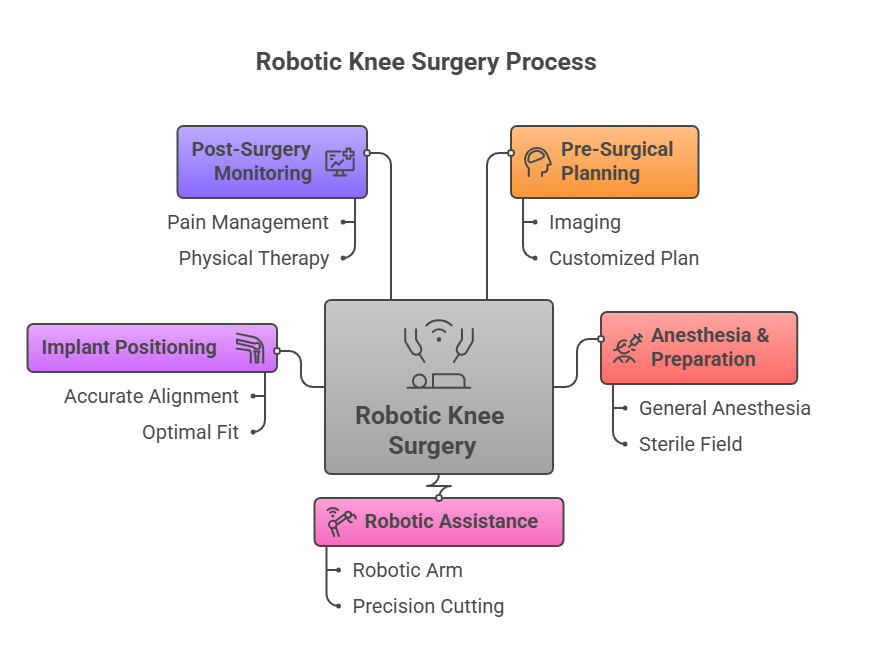
1. Pre-Surgical Planning
Before robotic knee surgery, advanced imaging like CT or MRI scans is used to create a detailed 3D model of the knee. This helps surgeons understand joint structure clearly and plan the procedure with high precision, ensuring better alignment, accurate implant placement, and improved surgical outcomes for the patient.
2. Anesthesia & Preparation
Patients receive either spinal or general anesthesia so they don’t feel any pain during the surgery.
The surgical team carefully readies the knee area, making sure everything is clean and the patient is positioned correctly, which allows the robotic surgery to go smoothly and keeps the operation safe for the whole time.
3. Robotic Assistance
During the procedure, robotic technology assists the surgeon in performing highly precise bone cutting and implant positioning.
This advanced system improves accuracy, reduces the chances of human error, and ensures proper knee alignment, which plays a crucial role in achieving better functionality and long-term success of the surgery.
4. Implant Positioning
The artificial knee joint is positioned with the help of a robot, which helps make sure the joint is aligned and balanced properly.
Correct placement of the implant helps it stay steady, works better with the body, and lasts longer. This makes the implant more comfortable for the patient and helps them feel better and live a more fulfilling life after the procedure.
5. Post-Surgery Monitoring
After the surgery, patients are closely monitored for recovery and guided through a structured physiotherapy program.
Regular follow-ups, pain management, and rehabilitation exercises help restore strength, improve mobility, and ensure faster healing, enabling patients to return to their normal daily activities safely and effectively.
Benefits of Robotic Knee Replacement Surgery
Robotic-assisted knee surgery offers several advantages compared to traditional techniques:
- Higher accuracy and precision
- Better implant alignment
- Reduced pain and blood loss
- Smaller incisions and less tissue damage
- Faster recovery and rehabilitation
- Improved long-term results
These benefits make robotic surgery a preferred option for many patients dealing with severe knee problems.
Recovery After Robotic Knee Replacement
Recovery plays a crucial role in the success of knee replacement surgery. Most patients are able to start walking with support within a day or two after the procedure.
A structured physiotherapy program helps in regaining strength, flexibility, and joint movement. Complete recovery may take a few months depending on age, overall health, and commitment to rehabilitation exercises.
Who Should Consider Robotic Knee Replacement?
Robotic knee replacement may be suitable for individuals who experience:
- Severe knee arthritis
- Chronic knee pain and stiffness
- Difficulty in walking or climbing stairs
- Limited mobility affecting daily activities
- Lack of improvement with non-surgical treatments
However, not every patient requires robotic surgery. The suitability depends on individual health condition and severity of joint damage.
Conclusion
Robotic knee replacement surgery is a modern and successful treatment for serious knee issues, but it might not be the best choice for every person. The best treatment depends on your specific condition, age, lifestyle, and overall health.
If you are experiencing knee pain or mobility issues, it is important to consult an orthopedic specialist. For trusted guidance and expert consultation, you can connect with Vishwanath Hospital, Pratap Nagar Jaipur, where patients receive proper evaluation and personalized advice to choose the right treatment option.
Book an appointment or contact a specialist today to get the right guidance and choose the most appropriate treatment for your knee health.
FAQ’s
1. What is robotic knee replacement surgery?
Robotic knee replacement surgery is an advanced procedure where robotic technology assists surgeons in performing knee replacement with greater precision, ensuring better alignment and improved long-term results.
2. Is robotic knee replacement surgery safe?
Yes, it is considered safe when performed by experienced orthopedic surgeons. The use of robotic guidance improves accuracy and reduces the risk of complications.
3. How is robotic knee surgery different from traditional surgery?
Robotic surgery offers higher precision, better implant positioning, smaller incisions, and faster recovery compared to traditional knee replacement techniques.
4. Who is a good candidate for robotic knee replacement?
Patients with severe arthritis, chronic knee pain, stiffness, or difficulty in walking who do not respond to non-surgical treatments may be suitable candidates.
5. How long does robotic knee replacement surgery take?
The procedure usually takes around 1 to 2 hours, depending on the complexity of the case and the patient’s condition.
6. What is the recovery time after robotic knee replacement?
Most patients begin walking within 24 – 48 hours, and full recovery may take a few months with proper physiotherapy and care.
7. Is robotic knee replacement painful?
The surgery itself is painless due to anesthesia, and post-surgery pain is usually minimal and well-managed with medications.
8. How long do robotic knee implants last?
With proper care and lifestyle, knee implants can last 15 to 20 years or even longer in many cases.
9. Are there any risks in robotic knee replacement surgery?
Like any surgery, there are minor risks such as infection or swelling, but robotic precision helps reduce these risks significantly.
10. When should I consult a doctor for knee replacement?
You should consult a doctor if knee pain affects daily activities, mobility is reduced, or other treatments are not providing relief.
Reference: