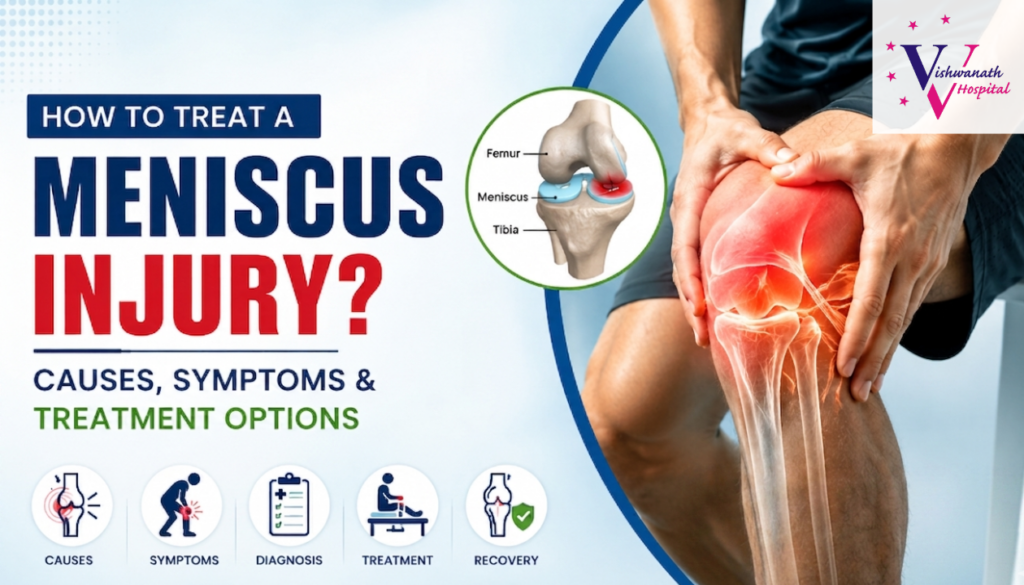
Learn about meniscus injury causes, symptoms, and effective treatment options, including physiotherapy and surgery, for faster recovery and better mobility.
Meniscal tears are one of the most common knee problems that affect your mobility and daily life. This occurs when the cartilage in the knee joint tears due to a sudden twisting motion, sports injury, or age related wear and tear.
This condition can cause pain, swelling, stiffness, and difficulty in walking or bending the knee. At Vishwanath Hospital, we provide advanced diagnosis and effective treatment options for meniscus injuries using modern orthopedic techniques.
Early identification and proper treatment are essential to prevent long-term knee damage and complications such as chronic pain or arthritis. Knowing this condition helps in faster recovery.
What is a Meniscus Injury?
The meniscus is a soft cartilage in the knee joint that acts as a cushion between the femur and tibia. Promotes smooth movement and stability of the knee. Meniscal tears occur when this cartilage is damaged due to trauma, sports, or degeneration.
Depending on the severity, the tear may be mild or severe. Proper diagnosis through physical examination or MRI is important to decide the right treatment plan for recovery and mobility improvement.
Causes of Meniscus Injury
A meniscus tear can happen due to:
- Sudden twisting or rotation of the knee
- Sports injuries (football, cricket, basketball, etc.)
- Heavy lifting with improper posture
- Age-related degeneration of cartilage
- Accidental falls or trauma
- Squatting or deep bending movements
Symptoms of Meniscus Injury
A meniscal injury causes knee pain, swelling, stiffness, and difficulty moving. Patients may lock, click, or become unsteady while walking. Early treatment can help prevent serious knee complications and joint damage.
Common Symptoms:
- Knee pain (especially while twisting or squatting)
- Swelling and stiffness
- Difficulty bending or straightening the knee
- Locking or clicking sensation in the joint
- Feeling of instability while walking
- Reduced range of motion
If these symptoms persist, immediate medical evaluation is necessary.
How to Treat a Meniscus Injury?
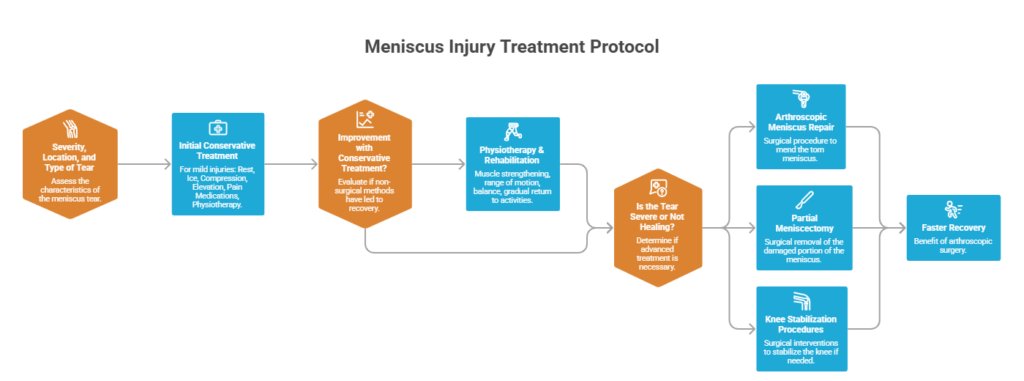
Treatment depends on the severity, location, and type of tear. At Vishwanath Hospital, we follow a step-by-step treatment approach:
1. Initial Conservative Treatment
For mild meniscus injuries, non-surgical methods are recommended:
- Rest – Avoid activities that stress the knee
- Ice Therapy – Reduce pain and swelling
- Compression & Elevation – Control inflammation
- Pain Medications – NSAIDs as prescribed by doctors
- Physiotherapy – Strengthening exercises for knee stability
Many patients improve within a few weeks with proper care.
2. Physiotherapy & Rehabilitation
Physiotherapy plays a key role in recovery. It includes:
- Muscle strengthening exercises
- Range of motion training
- Balance and stability exercises
- Gradual return to normal activities
At Vishwanath Hospital, customized physiotherapy plans are designed for each patient.
3. Advanced Treatment Options
If the tear is severe or does not heal with conservative treatment, surgical options may be required:
- Arthroscopic meniscus repair
- Partial meniscectomy (removal of damaged part)
- Knee stabilization procedures (if required)
Arthroscopic surgery is minimally invasive and ensures faster recovery.
Recovery Time for Meniscus Injury
- Mild injury: 2–6 weeks
- Moderate tear: 4–8 weeks with physiotherapy
- Severe injury/surgery: 2–3 months or more
Early diagnosis improves recovery speed and reduces complications.
When Should You Visit a Doctor?
If you experience continuous knee pain, swelling, stiffness, or difficulty while walking, it is important to consult an orthopedic specialist immediately. Many people ignore symptoms like knee locking, instability, or pain during bending movements, which can worsen the injury over time.
Early medical evaluation can help determine the severity of a meniscal tear and prevent further damage to the knee joint. Prompt treatment also reduces the risk of complications such as chronic pain, limited mobility, and arthritis. Proper diagnosis and care can speed recovery and allow patients to return to normal activities safely.
Why Choose Vishwanath Hospital for Meniscus Injury Treatment?
At Vishwanath Hospital, we provide comprehensive and advanced care for meniscus injuries using modern orthopedic techniques and personalized treatment plans. Our experienced knee specialists focus on accurate diagnosis and effective treatment to restore knee function and mobility.
We offer advanced arthroscopic surgery, personalized physical therapy programs, and comprehensive rehabilitation support for faster recovery.
We strive to provide the best possible outcomes for all of our patients through patient-centered care and state-of-the-art medical equipment. Our goal is to help people return to an active, pain-free lifestyle while maintaining the long-term health of their knees and improving their quality of life.
Conclusion
A meniscus injury should never be ignored. With proper diagnosis and timely treatment, most patients recover completely without complications. Whether it is conservative care, physiotherapy, or surgery, early intervention is the key to a healthy knee.
At Vishwanath Hospital, we ensure advanced and compassionate care for every knee injury patient.
FAQ’s
1. What is a meniscus injury?
A meniscus injury occurs when the cartilage in the knee joint gets torn or damaged, usually due to twisting movements, sports injuries, or age-related wear and tear.
2. What are the common symptoms of a meniscus tear?
Common symptoms include knee pain, swelling, stiffness, difficulty bending the knee, locking sensation, clicking sounds, and instability while walking.
3. Can a meniscus injury heal without surgery?
Yes, mild meniscus injuries may heal with rest, ice therapy, medications, and physiotherapy. Treatment depends on the severity and location of the tear.
4. How is a meniscus injury diagnosed?
Doctors diagnose meniscus injuries through physical examination, medical history, and imaging tests such as MRI or X-rays.
5. What causes a meniscus tear?
Meniscus tears can occur due to sudden knee twisting, sports activities, heavy lifting, accidental falls, or age-related cartilage degeneration.
6. How long does it take to recover from a meniscus injury?
Recovery time varies depending on injury severity. Mild injuries may recover in a few weeks, while severe tears or surgery can take several months.
7. Is walking good for a meniscus injury?
Light walking may be allowed in some cases, but excessive pressure on the knee can worsen the injury. Always follow your doctor’s advice.
8. When is surgery needed for a meniscus injury?
Surgery may be recommended if the tear is severe, causes knee locking, or does not improve with conservative treatment and physiotherapy.
9. Can a meniscus injury lead to arthritis?
If left untreated, a meniscus injury may increase the risk of knee joint degeneration and arthritis over time.
10. Why should I choose Vishwanath Hospital for meniscus injury treatment?
Vishwanath Hospital offers advanced orthopedic care, expert knee specialists, modern arthroscopic surgery, and personalized rehabilitation programs for effective recovery.
Reference:
https://my.clevelandclinic.org/health/diseases/17219-torn-meniscus
https://www.mayoclinic.org/diseases-conditions/torn-meniscus/diagnosis-treatment/drc-20354823