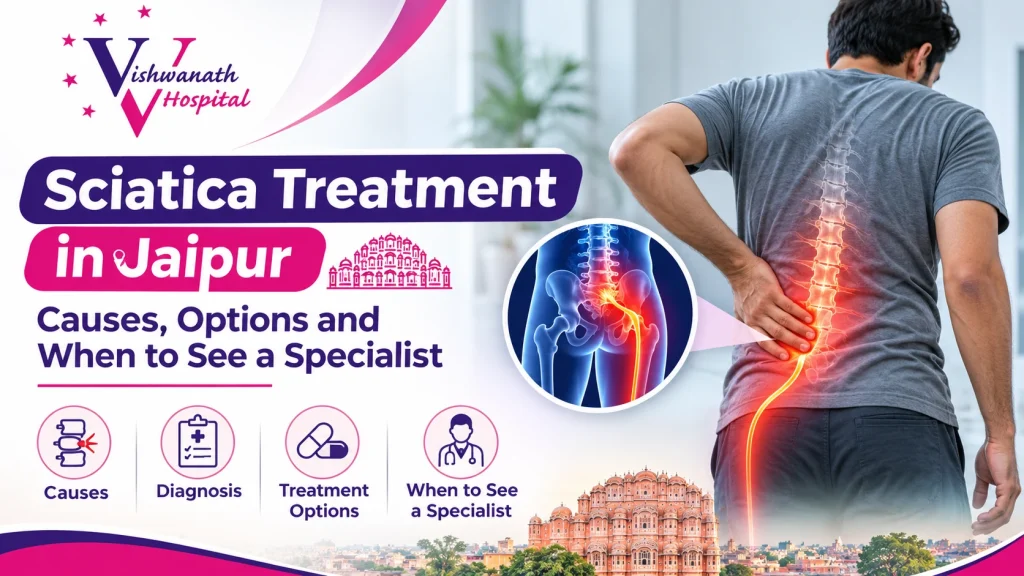
If a sharp, electric pain runs from your lower back down through your buttock and leg, you probably already know how much it can disrupt daily life.
Sitting through a meeting, climbing stairs or even sleeping can become difficult. This kind of pain is called sciatica, and the good news is that most people recover well with the right care.
If you are looking for sciatica treatment in Jaipur, this guide explains what is going on in your body and what you can do about it.
What Is Sciatica?
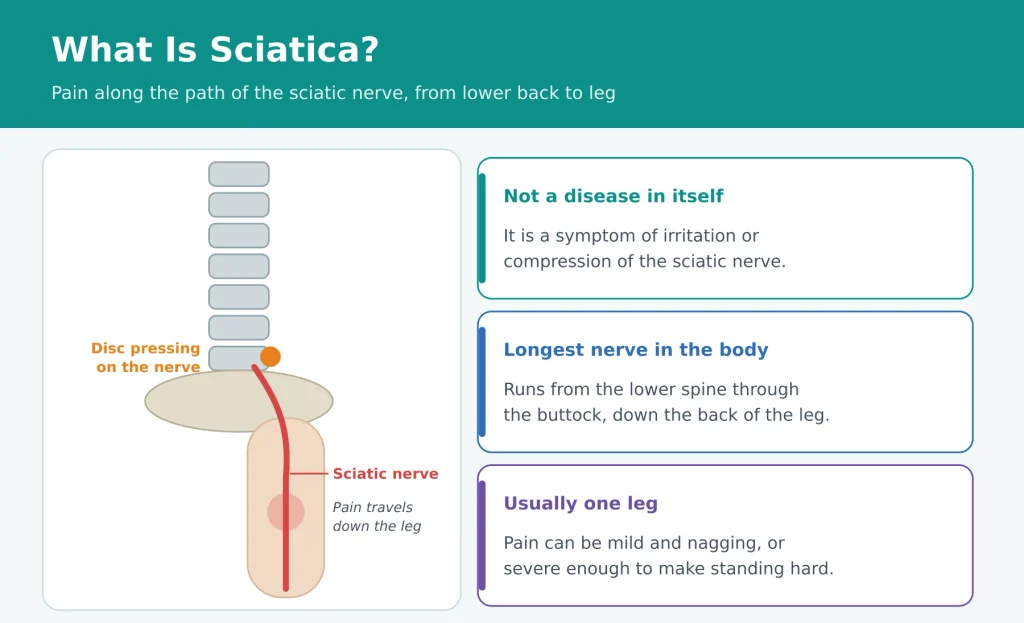
Sciatica is not a disease in itself. It is a symptom of irritation or compression of the sciatic nerve, the longest nerve in the body.
It starts in the lower spine, passes through the buttock and runs down the back of each leg. When something presses on this nerve or on its roots in the spine, the pain travels along its path.
Usually only one leg is affected. The pain can be mild and nagging, or severe enough to make standing painful.
Common Symptoms
Sciatica feels different from ordinary back pain. Watch for:
- Pain that starts in the lower back or buttock and moves down the leg, sometimes up to the foot
- A burning, shooting or electric-shock type of pain
- Numbness, tingling or “pins and needles” in the leg or foot
- Weakness in the leg, or difficulty lifting the foot
- Pain that gets worse on sitting, coughing, sneezing or bending forward
What Causes Sciatica?
In most cases, something in the spine is pressing on the nerve. The usual causes are:
- Slipped (herniated) disc: the soft cushion between two vertebrae bulges out and presses on a nerve root. This is the most common cause.
- Spinal stenosis: narrowing of the spinal canal, more common after middle age.
- Spondylolisthesis: one vertebra slips forward over the one below it.
- Degenerative disc disease: wear and tear of the discs with age.
- Piriformis syndrome: a tight muscle deep in the buttock irritates the nerve.
- Injury or trauma to the spine or pelvis.
Long hours of desk work, lifting heavy weights with poor posture, obesity, diabetes and a sedentary lifestyle can all raise the risk.
How Is Sciatica Diagnosed?
A good diagnosis starts with listening to your story and examining you. A specialist will check your reflexes, muscle strength and how the pain responds to certain leg movements.
Depending on what is found, an X-ray may be advised to look at the bones, and an MRI if a disc problem or nerve compression is suspected. Not everyone needs an MRI, and a proper clinical examination usually decides what is necessary.
Sciatica Treatment Options
The right treatment depends on the cause, how severe the pain is and how long it has lasted. Most people improve without surgery.
1. Rest, activity modification and self-care
A day or two of reduced activity can help, but long bed rest usually makes things worse. Gentle walking, avoiding heavy lifting and not sitting for long stretches are the first steps. Hot or cold packs may ease the pain.
2. Medicines
Your doctor may prescribe pain relievers, anti-inflammatory medicines, muscle relaxants or nerve-pain medicines for a short period. These are best taken under medical guidance rather than on your own.
3. Physiotherapy
This is the backbone of recovery. A trained physiotherapist teaches stretching and strengthening exercises for the back, core and hips, and corrects posture so the pressure on the nerve reduces. Many patients get lasting relief with a consistent programme.
4. Injections
If the pain is severe and does not settle with medicines and exercise, an epidural steroid injection near the irritated nerve may be considered to reduce inflammation and give a window for rehabilitation.
5. Surgery
Surgery is needed in a small number of cases, for example when there is significant leg weakness, pain that does not improve despite several weeks of proper treatment, or a large disc pressing heavily on the nerve.
Procedures such as microdiscectomy remove the part of the disc that is pressing on the nerve. Modern spine surgery is done through small incisions, which usually means a faster recovery. If you want to know more, you can read about our spine surgery services in Jaipur.
Warning Signs: Do Not Wait
See a doctor urgently if sciatica comes with:
- Loss of control over bladder or bowels
- Numbness in the groin or inner thighs
- Sudden, severe weakness in one or both legs
- Pain after a fall or accident
- Fever along with back pain
These can signal a serious nerve compression that needs immediate attention.
Why Choose a Specialist Orthopedic Hospital?
Sciatica is a spine and nerve problem, and the right diagnosis makes all the difference. Treating the symptom without finding the cause can lead to months of unnecessary pain.
At Vishwanath Hospital, an orthopedic super specialty hospital in Pratap Nagar, patients are assessed by experienced orthopedic surgeons who first look at conservative options and recommend surgery only when it is truly needed.
The hospital is supported by physiotherapists, nursing staff and technicians, with round-the-clock emergency care. You can see the full range of care on our services page or learn more about the hospital.
The hospital is conveniently located on Haldighati Marg, around 200 metres from Tonk Road, so it is easy to reach from most parts of Jaipur.
Simple Habits to Prevent Sciatica
- Stay active and walk daily
- Strengthen your core and back muscles
- Sit with proper back support and take breaks every 30 to 40 minutes
- Lift with your knees, not your back
- Maintain a healthy weight
- Keep your bones healthy with enough calcium and vitamin D. Our monthly preventive bone health camp on the 5th of every month is a good place to start.
Book a Consultation
If leg pain or back pain is troubling you, do not just keep taking painkillers. An early check-up can prevent a small problem from becoming a long one.
OPD timings are 9 AM to 1 PM and 5 PM to 7 PM. You can contact us or book an appointment directly on WhatsApp at 9414054377.
FAQs
1. How long does sciatica take to heal?
Most people feel better within 4 to 8 weeks with proper care. Some recover sooner, while pain from a large disc problem can take longer. If there is no improvement after a few weeks, a specialist review is advised.
2. Can sciatica go away on its own?
Mild sciatica often settles with rest, light activity and basic care. But if pain keeps returning or gets worse, it is better to find the underlying cause rather than wait.
3. Do I always need surgery for sciatica?
No. The large majority of patients recover with medicines, physiotherapy and lifestyle changes. Surgery is considered only for severe or non-improving cases, or when there are warning signs like weakness or loss of bladder control.
4. Which doctor should I consult for sciatica in Jaipur?
You should consult an orthopedic surgeon or spine specialist. They can find whether the cause is a disc, a narrow canal or another problem, and plan treatment accordingly. You can find an orthopedic surgeon in Jaipur at Vishwanath Hospital.
5. Is MRI necessary to diagnose sciatica?
Not always. Many cases are diagnosed through examination alone. An MRI is usually advised when the pain is severe, long-lasting, or when surgery or injections are being considered.
6. Is it safe to exercise with sciatica?
Gentle, guided exercise is helpful, but the wrong exercises can worsen the pain. It is best to start under the advice of a doctor or physiotherapist, and avoid heavy lifting or sudden bending.
7. What is the best sleeping position for sciatica?
Many people find relief lying on the back with a pillow under the knees, or on the side with a pillow between the knees. A medium-firm mattress usually works better than a very soft one.
8. Can sitting for long hours cause sciatica?
Prolonged sitting, especially with poor posture, puts pressure on the lower spine and discs and can trigger or aggravate sciatica. Taking short walking breaks and sitting with good back support helps.
9. Can sciatica come back after treatment?
It can, particularly if the lifestyle factors that caused it continue. Regular exercise, good posture and a healthy weight reduce the chances of recurrence.
10. What is the cost of sciatica treatment in Jaipur?
The cost depends on the cause and the treatment needed, whether medicines and physiotherapy or a procedure. A consultation and examination is the first step, after which the doctor can explain the plan. You can call the hospital or message on WhatsApp for details.
Conclusion
Sciatica is painful, but it is very treatable. Most people recover with the right mix of rest, physiotherapy and healthy habits, and surgery is needed only in a few cases.
Do not ignore the pain or rely on painkillers alone. An early check-up at Vishwanath Hospital can help you recover faster. Contact us to book your appointment.
Disclaimer: This article is for general information only and is not a substitute for medical advice. Please consult a qualified doctor for diagnosis and treatment.