
Heel pain while walking can be caused by plantar fasciitis, Achilles tendon problems, injuries, arthritis, or improper footwear. Proper diagnosis by an orthopedic specialist can help identify the cause and guide treatment such as rest, physiotherapy, stretching, supportive footwear, or other medical care.
Walking can cause pain in the heel, making everyday tasks like standing, climbing stairs, exercising, or going to work feel uncomfortable. The pain can happen under the heel, at the back of the heel, or on the sides, depending on what’s causing it. Plantar fasciitis is a very common reason for pain underneath the heel, but other issues like problems with the Achilles tendon, bursitis, stress fractures, arthritis, or nerve problems can also lead to heel pain.
At Vishwanath Hospital, Pratap Nagar, Jaipur, orthopedic specialists can evaluate persistent foot and heel problems and recommend treatment according to the underlying condition. Vishwanath Hospital is an orthopedic super-specialty hospital offering orthopedic consultation, physiotherapy, X-ray/lab facilities, fracture management, joint replacement, and other orthopedic services.
If you are experiencing heel pain while walking, understanding its possible causes and knowing when to seek medical attention can help you take appropriate steps toward recovery.
What Causes Heel Pain While Walking?
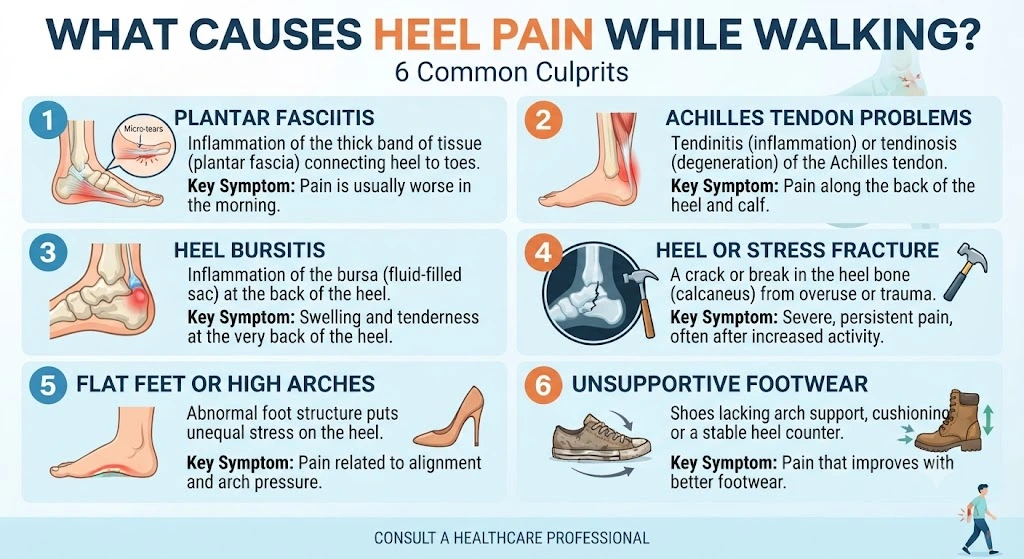
Heel pain can develop because of repeated stress, unsuitable footwear, increased physical activity, injury, or certain medical conditions. The location and pattern of pain can provide clues, but a proper clinical evaluation is needed to determine the exact cause.
1. Plantar Fasciitis
Plantar fasciitis is a common reason for pain under the heel. The plantar fascia is a tough strip of tissue that runs along the bottom of the foot and helps support the arch.
Pain is often worse during the first few steps after getting out of bed or after sitting for a long time. It may improve temporarily with movement but can become worse after prolonged standing, walking, or running.
2. Achilles Tendon Problems
The Achilles tendon connects the calf muscles to the heel bone. Irritation or degeneration of this tendon can cause pain at the back of the heel, sometimes extending toward the ankle or calf.
People who suddenly increase running, walking, or other physical activities may be more likely to develop Achilles-related heel pain.
3. Heel Bursitis
Small bags filled with fluid called bursae help make moving around joints and tendons smoother by reducing friction. Inflammation in a bursa close to the heel can lead to pain, sensitivity, swelling, or a feeling of discomfort when wearing shoes.
4. Heel or Stress Fracture
A heel fracture can occur after significant trauma, such as a fall or accident. Stress fractures may develop from repetitive loading, particularly after a sudden increase in physical activity.
Severe pain, swelling, bruising, or difficulty putting weight on the foot after an injury requires medical evaluation.
5. Flat Feet or High Arches
The shape of your foot can affect how pressure is distributed while walking. Flat feet and high arches may place additional stress on the plantar fascia and other structures of the foot.
6. Unsupportive Footwear
Shoes that don’t have enough cushioning or support can put more pressure on the heel, especially if you stand or walk a lot on tough surfaces for long periods.
Wearing shoes that provide good support and using the right kind of insoles can help take some pressure off the heel.
Symptoms of Heel Pain
The symptoms can vary depending on the cause. Common symptoms include:
- Sharp pain underneath the heel
- Pain when taking the first steps after rest
- Heel pain while walking or standing
- Pain after prolonged physical activity
- Tenderness around the heel
- Swelling or redness
- Pain at the back of the heel
- Difficulty putting weight on the affected foot
- Stiffness in the foot or ankle
The location and timing of the pain can help an orthopedic specialist determine which structures may be involved.
How Is Heel Pain Diagnosed?
A proper diagnosis is important because different conditions can cause similar heel symptoms. Your orthopedic doctor will generally begin by discussing your symptoms and medical history.
Medical History and Physical Examination
Your doctor might ask when the pain began, if it gets worse in the morning or after doing something, if you’ve been exercising more recently, and if you had an injury.
The foot and ankle may be examined for tenderness, swelling, flexibility, range of motion, and other signs that can help identify the cause. Your walking pattern may also be assessed.
Imaging Tests
Sometimes, imaging tests aren’t needed at all, especially when the symptoms and physical exam clearly point to plantar fasciitis. Sometimes, a doctor might suggest an X-ray if they need to check for a broken bone, arthritis, or another issue related to the bones.
In selected cases, an MRI or other imaging may be considered when the diagnosis remains unclear or a soft-tissue injury or stress fracture is suspected.
Heel Pain Treatment Options
Treatment depends on the underlying cause, severity of symptoms, and how long the problem has been present. Many common causes of heel pain can initially be managed without surgery.
Rest and Activity Modification
Cutting back on activities that make heel pain worse can let the sore tissues heal properly. You might be advised to avoid activities like running, jumping, standing for long periods, or any other high-impact exercises for a while.
Stretching and Physiotherapy
Gentle stretching of the calf and plantar fascia can be useful for conditions such as plantar fasciitis. A physiotherapist can guide you regarding appropriate exercises and progression.
Supportive Footwear
Shoes that have enough cushioning and support can help take some pressure off the heel when you walk. Heel cups, heel pads, or other suitable shoe inserts might also be suggested for certain patients.
Ice and Pain Management
For some types of heel pain, applying a wrapped ice pack for short periods may help relieve discomfort.
Pain-relieving medicines may also be recommended when appropriate, but they should be used according to medical advice, particularly if you have other health conditions or take other medicines.
Night Splints
For persistent plantar fasciitis, a healthcare professional may recommend a night splint to maintain a gentle stretch of the plantar fascia and calf while sleeping.
Advanced Treatment
When heel pain continues despite appropriate conservative treatment, your orthopedic specialist may discuss additional treatment options based on the diagnosis.
Surgery is generally not the first treatment for common plantar fasciitis; most patients improve with non-surgical management.
When Should You See an Orthopedic Doctor?
You should consider professional evaluation if:
- Heel pain continues or keeps returning
- Pain is interfering with normal walking
- Symptoms are getting progressively worse
- You have significant swelling or bruising
- You cannot comfortably put weight on the foot
- Heel pain began after an accident or injury
- You experience numbness or tingling
- Home measures are not improving the symptoms
If you experience sudden sharp pain in the heel after an injury, a popping or snapping noise, a lot of swelling, or trouble walking, it may mean you have a serious injury and should see a doctor right away.
How to Prevent Heel Pain While Walking?
Some simple habits can help reduce unnecessary stress on the feet and heels.
Choose Supportive Shoes
Wear comfortable footwear with adequate cushioning and support, especially if your work requires prolonged standing or walking.
Increase Exercise Gradually
Avoid quickly increasing how far you run, walk, or do other activities that hit your joints hard. Gradually increasing your activity helps your body get used to more intense exercise over time.
Stretch Regularly
Gentle calf and foot stretches can help maintain flexibility. If you already have significant heel pain, ask a healthcare professional which exercises are appropriate.
Maintain a Healthy Weight
Carrying extra weight can put more pressure on the feet when you stand or walk. Keeping a healthy weight can help lower the pressure on your heel.
Avoid Walking Barefoot on Hard Surfaces
If you are prone to heel pain, prolonged barefoot walking on hard floors may increase discomfort. Supportive footwear can provide additional cushioning.
Why Choose Vishwanath Hospital for Orthopedic Care in Pratap Nagar Jaipur?
Vishwanath Hospital is a hospital that focuses on orthopedic care and is situated at Haldighati Marg, Sector 6, Pratap Nagar, Jaipur. The hospital offers expert advice and treatment for issues related to bones, joints, injuries, and other problems that affect the musculoskeletal system.
The facility offers services like outpatient department consultations, X-ray and lab tests, physiotherapy, operating room, treatment for fractures, joint replacement procedures, and spine surgeries.
The hospital is also conveniently located near Tonk Road and provides access to patients from areas including Pratap Nagar, Sanganer, Jagatpura, and nearby parts of Jaipur.
For people searching for heel pain treatment in Pratap Nagar Jaipur or an orthopedic doctor in Pratap Nagar Jaipur, timely consultation can help identify the underlying cause and determine an appropriate treatment approach.
Conclusion
Heel pain while walking should not be ignored, especially when it persists or affects daily activities. Conditions such as plantar fasciitis, Achilles tendon problems, bursitis, arthritis, or injuries may require proper evaluation and treatment.
At Vishwanath Hospital, patients can access comprehensive orthopedic consultation, physiotherapy, X-ray and diagnostic services, fracture management, joint replacement, and spine care under one roof.
If you are looking for heel pain treatment in Pratap Nagar Jaipur or an experienced orthopedic doctor in Jaipur, timely consultation can help identify the cause and guide appropriate treatment. Contact Vishwanath Hospital today for personalized orthopedic care and take a step toward comfortable movement.
Get Expert Heel Pain Treatment at Vishwanath Hospital
Looking for heel pain treatment in Pratap Nagar Jaipur? Visit Vishwanath Hospital for orthopedic evaluation and personalized treatment.
Book your consultation today and take the right step toward healthier, pain-free movement.
FAQ’s
1. What is the most common cause of heel pain while walking?
Plantar fasciitis is one of the most common causes of pain underneath the heel, particularly when pain is worse with the first steps after rest.
2. Why does my heel hurt when I take my first steps in the morning?
Morning heel pain that is particularly noticeable with the first few steps after getting out of bed is a common pattern of plantar fasciitis.
3. Can heel pain go away without surgery?
Yes. Many common causes of heel pain, including plantar fasciitis, can improve with conservative treatment such as activity modification, stretching, supportive footwear, and physiotherapy.
4. Can wrong shoes cause heel pain?
Yes. Shoes that lack adequate cushioning or support can increase stress on the heel and contribute to foot discomfort.
5. When should I see a doctor for heel pain?
Consult an orthopedic doctor if the pain persists, worsens, affects walking, or develops after an injury. Severe pain, swelling, or difficulty putting weight on the foot warrants prompt evaluation.
6. Is physiotherapy helpful for heel pain?
Physiotherapy may help certain causes of heel pain by addressing flexibility, strength, movement patterns, and load management. A physiotherapist can recommend exercises based on your condition.
7. Can heel pain be caused by a fracture?
Yes. A traumatic injury or repetitive stress can cause a heel fracture or stress fracture. Severe pain, swelling, bruising, or difficulty walking after an injury should be medically evaluated.
8. What type of doctor treats heel pain?
An orthopedic specialist can evaluate heel pain and determine whether it is related to the plantar fascia, Achilles tendon, bone, joint, or another structure.
9. Does a heel spur always cause heel pain?
No. Heel spurs can be visible on X-rays without being the actual cause of pain. Treatment should focus on identifying and addressing the underlying condition rather than assuming the spur is responsible.
10. Where can I get heel pain treatment in Pratap Nagar Jaipur?
You can consult the orthopedic team at Vishwanath Hospital, Pratap Nagar, Jaipur, for evaluation of persistent heel and foot pain. The hospital provides orthopedic consultation, diagnostic facilities, physiotherapy, and other orthopedic services.