The cost of knee replacement surgery in India depends on the hospital, surgeon, implant type, city, and rehabilitation, offering quality treatment at affordable prices.
Knee pain from conditions like osteoarthritis, rheumatoid arthritis, sports injuries, or natural wear and tear over time can really impact how well you can live your life. When medicines, physical therapy, and changes to your daily habits don’t help anymore, knee replacement surgery is often the best choice for relief.
Knowing the cost of knee replacement surgery in India is essential for planning your treatment and choosing the right hospital.If you’re looking for trusted orthopedic care, Vishwanath Hospital is recognized as one of the leading orthopedic hospitals in Jaipur, offering advanced knee replacement surgery performed by experienced orthopedic surgeons using modern surgical techniques.
This guide explains the average knee replacement surgery cost in India, factors that influence pricing, types of procedures, recovery, and tips for selecting the right hospital.
Why Choose Vishwanath Hospital for Knee Replacement Surgery?
Vishwanath Hospital is a trusted destination for knee replacement surgery in Jaipur, offering advanced orthopedic care backed by experienced orthopedic surgeons and modern medical technology.
The hospital offers tailored treatment plans, modern operating rooms, digital diagnostic tools, and full physiotherapy services to help patients recover more quickly. Vishwanath Hospital is dedicated to ensuring patient safety, offering clear and honest treatment, providing kind care after surgery, and achieving good results with joint replacements.
The hospital aims to help patients recover movement and live a life that is free from pain and full of activity.
What Is Knee Replacement Surgery?
Knee replacement surgery, also called knee arthroplasty, is a surgical procedure in which damaged cartilage and bone in the knee joint are replaced with artificial implants.
The goal is to relieve chronic pain, restore mobility, improve joint function, and enhance overall quality of life.
This surgery is often suggested for people who have serious arthritis, major joint wear and tear, or bad knee injuries from accidents that don’t get better with less invasive treatments.
Average Cost of Knee Replacement Surgery in India
The cost of knee replacement surgery varies depending on the hospital, city, surgeon’s expertise, implant type, and patient’s medical condition.
| Procedure | Estimated Cost in India |
| Total Knee Replacement | ₹1.8 Lakhs – ₹4.5 Lakhs |
| Partial Knee Replacement | ₹1.5 Lakhs – ₹3.5 Lakhs |
| Bilateral Knee Replacement | ₹3.5 Lakhs – ₹7 Lakhs |
| Robotic Knee Replacement | ₹2.8 Lakhs – ₹6 Lakhs |
Note: These are approximate costs. The final treatment cost may vary based on individual clinical requirements, implant selection, hospital facilities, and additional medical services.
Factors That Affect Knee Replacement Surgery Cost
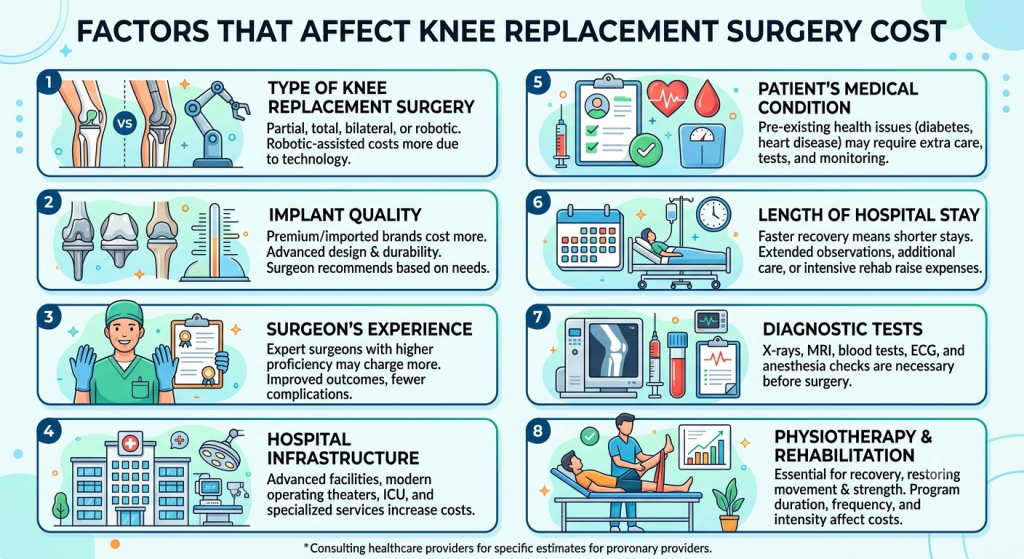
1. Type of Knee Replacement Surgery
The type of knee replacement procedure significantly impacts the overall treatment cost. Partial, total, bilateral, and robotic knee replacement surgeries require different surgical techniques, operating time, and implant types.
Robotic-assisted surgeries usually cost more because they use advanced technology, but some partial replacements might be cheaper depending on the patient’s specific situation.
2. Implant Quality
The quality and brand of the implant play a major role in determining surgery costs. Premium or imported implants are typically more expensive than standard options because they offer advanced design, improved durability, and long-term performance.
Your orthopedic surgeon will recommend the most suitable implant based on your age, lifestyle, and medical needs.
3. Surgeon’s Experience
An experienced orthopedic surgeon with expertise in joint replacement surgery may charge higher professional fees.
However, choosing a skilled specialist often improves surgical precision, reduces complications, and enhances recovery outcomes. Investing in an experienced surgeon can contribute to better long-term results and overall patient satisfaction.
4. Hospital Infrastructure
Hospitals equipped with advanced operation theatres, modern imaging technology, intensive care units, and specialized rehabilitation services may have higher treatment costs.
These facilities support accurate diagnosis, safer surgical procedures, and comprehensive post-operative care, ensuring patients receive quality orthopedic treatment throughout their recovery journey.
5. Patient’s Medical Condition
A patient’s overall health can affect the total cost of knee replacement surgery. Conditions such as diabetes, obesity, heart disease, or osteoporosis may require additional diagnostic tests, specialist consultations, medications, and careful monitoring before and after surgery, which can increase the overall treatment expenses.
6. Length of Hospital Stay
The duration of hospitalization directly influences treatment costs. Patients who recover quickly usually have shorter hospital stays, while those requiring extended observation, additional medical care, or intensive rehabilitation may experience higher overall expenses due to accommodation, nursing, and supportive healthcare services.
7. Diagnostic Tests
Before having knee replacement surgery, doctors do some tests to check the patient’s general health and see if they are ready for the operation.
These could involve X-rays, MRI scans, blood tests, ECGs, and checks for anesthesia. The number and kind of tests needed affect the total cost of the treatment.
8. Physiotherapy & Rehabilitation
Physiotherapy plays a crucial role in ensuring a successful recovery after knee replacement surgery. A structured rehabilitation program helps restore knee movement, strengthen surrounding muscles, improve balance, reduce pain, and enable patients to return to their daily activities with confidence.
Regular sessions also lower the risk of complications and enhance the long-term success of the implant. The cost of physiotherapy is included in the overall knee replacement treatment expenses and varies based on the duration, frequency, and intensity of the rehabilitation program recommended by your orthopedic specialist.
Who Needs Knee Replacement Surgery?
Knee replacement surgery is usually recommended for patients who experience severe knee pain that affects their daily life and does not improve with medications, physiotherapy, or other non-surgical treatments.
This procedure helps people with advanced osteoarthritis, rheumatoid arthritis, chronic arthritis, knee deformity, persistent stiffness, limited mobility, or difficulty walking or going up and down stairs.
If everyday activities become painful and conservative treatments fail to provide relief, consulting an experienced orthopedic surgeon is the best step toward restoring mobility and improving quality of life.
Benefits of Knee Replacement Surgery
Modern knee replacement surgery offers numerous long-term benefits for patients suffering from chronic knee pain.
Major Benefits
- Significant pain relief
- Improved mobility
- Better joint stability
- Enhanced quality of life
- Easier walking
- Improved flexibility
- Better sleep quality
- Increased independence
- Long-lasting results
- Return to daily activities
Recovery After Knee Replacement Surgery
Recovery varies from patient to patient, but most individuals experience steady improvement with proper rehabilitation.
Typical Recovery Timeline
- Day 1–2: Standing and walking with assistance.
- Week 2–4: Improved walking and reduced swelling.
- Week 6–8: Return to many daily activities.
- 3 Months: Significant improvement in strength and mobility.
- 6–12 Months: Full recovery for most patients.
Following your surgeon’s advice and attending physiotherapy sessions consistently can greatly improve recovery outcomes.
Why Vishwanath Hospital Is a Trusted Choice
Vishwanath Hospital is committed to providing comprehensive orthopedic care with a patient-first approach. From diagnosis to surgery and rehabilitation, the hospital focuses on delivering safe, effective, and personalized treatment.
Whether you require total knee replacement, partial knee replacement, fracture treatment, sports injury treatment, or arthritis treatment, Viswanath Hospital’s experienced team of orthopedic surgeons will provide you with quality treatment backed by cutting edge medical technology and compassionate care.
Conclusion
Knowing the cost of knee replacement surgery in India helps patients make better choices about their healthcare. It’s important to choose a hospital with experienced orthopedic doctors and good rehabilitation services, even though the cost can change based on different factors.This helps ensure the treatment goes well.
If you are looking for expert knee replacement surgery in Jaipur, Vishwanath Hospital offers advanced orthopedic care, personalized treatment plans, and dedicated post-operative rehabilitation to help you regain pain-free movement and improve your quality of life.
Contact Vishwanath Hospital Today
If persistent knee pain is limiting your daily activities, don’t wait to seek expert care.
Book a consultation at Vishwanath Hospital to discuss your treatment options with experienced orthopedic specialists. From diagnosis to recovery, our team is committed to helping you return to an active, pain-free lifestyle.
FAQ’s
1. What is the average cost of knee replacement surgery in India?
The average cost ranges from ₹1.8 lakh to ₹4.5 lakh, depending on the type of surgery, hospital, implant, and surgeon’s expertise.
2. Does health insurance cover knee replacement surgery?
Many health insurance policies cover medically necessary knee replacement surgery, subject to policy terms and conditions.
3. How long does knee replacement surgery take?
The procedure usually takes 1 to 2 hours, depending on the complexity of the case.
4. How long is the hospital stay after surgery?
Most patients stay in the hospital for 3 to 5 days, depending on their recovery progress.
5. When can I walk after knee replacement surgery?
Many patients begin standing and walking with assistance within 24 to 48 hours after surgery.
6. How long do knee implants last?
Modern knee implants can often last 15 to 20 years or more, depending on the implant type, activity level, and overall health.
7. Is knee replacement surgery painful?
Pain is managed with anesthesia, medications, and rehabilitation. Most patients experience significant pain relief after recovery.
8. What conditions require knee replacement surgery?
Severe osteoarthritis, rheumatoid arthritis, post-traumatic arthritis, and advanced knee joint damage are common reasons for surgery.
9. Why choose Vishwanath Hospital for knee replacement surgery?
Vishwanath Hospital offers experienced orthopedic surgeons, advanced surgical technology, personalized rehabilitation, and comprehensive orthopedic care.
10. How can I reduce the cost of knee replacement surgery?
Choosing an appropriate hospital, knowing your insurance coverage, discussing implant options, and planning treatment with your orthopedic surgeon can help manage overall costs.